
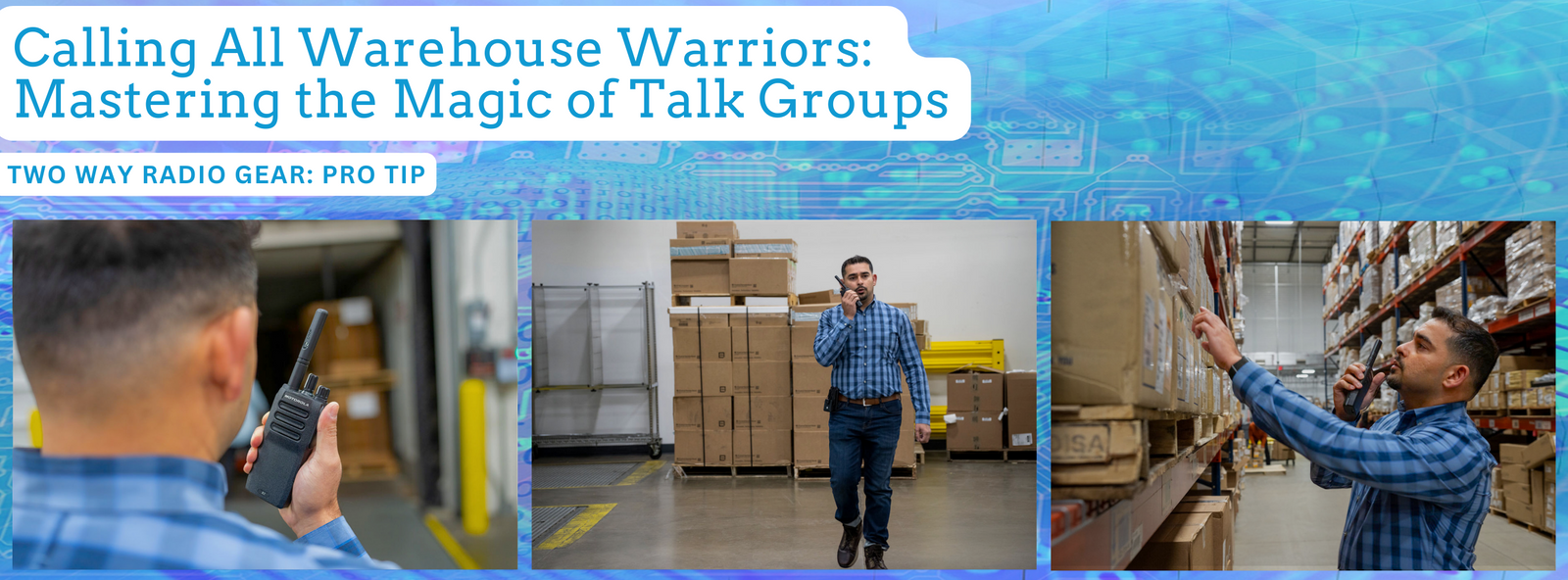
Alright, warehouse warriors! Let's talk tech, specifically, the tech that keeps our days running smooth and, more importantly, safe. That's right, I'm talking about those trusty digital two-way radios (a.k.a. the new and improved walkie-talkies!).
Now, these radios are awesome for clear communication, but here's the thing: to truly unlock their power, you gotta get your talk groups in order. Gone are the days of the old-school "channels" (remember those frustrating moments when someone on a different channel needed help?). Talk groups are way smarter, they let you create specific groups of people who can talk to each other directly, cutting out all the unnecessary chatter.
So, why are talk groups a game-changer?
- Safety First: Emergencies don't wait for channel surfing. Talk groups ensure critical messages reach the right people instantly, be it the safety team, a specific forklift operator, or the entire warehouse crew.
- Boosting Efficiency: Imagine trying to coordinate a pick-up with the packer while someone else is asking about missing inventory on a different channel. Talk groups eliminate this chaos, allowing focused communication within specific teams, which means faster order fulfillment and a happier boss (just sayin').
- Less Noise, More Productivity: Nobody likes a cluttered radio. Talk groups keep things organized, minimizing distractions and allowing everyone to focus on their tasks.
Building Your Talk Group Dream Team:
Here's the good news: setting up talk groups isn't rocket science. Most digital radios come with user-friendly software that lets you create and assign talk groups. But before you go wild, consider this:
- Function Over Fun: Don't get carried away with fancy names. Choose clear, descriptive names that reflect the group's function, like "Picking Team," "Forklift Crew," or "Safety Response."
- Keep it Tight: Don't overload a single talk group. Include only the people who need to communicate regularly within that group.
- Think Hierarchy: Maybe you have a "Management" talk group that can reach all other groups but not vice versa. This keeps everyone informed when needed.
- Tech Time: Work with your supervisor or IT team to set up the talk groups on your digital radios. It's a simple process, but having the right tech support ensures everything runs smoothly.
Remember, the goal is to create a communication network that's efficient, safe, and keeps the information flowing smoothly. Talk groups are your secret weapon, use them wisely, warehouse warriors!
Bonus Tip: Feeling lost? Don't be afraid to contact your two-way radio supplier for help setting up talk groups, we'll be happy to guide you. Now, get out there and conquer that warehouse with crystal-clear communication!
Build the talk-group plan into the system
Talk groups work best when they support the roles, coverage needs, and charging routine of the whole operation. Use our business two-way radio planning guide to map those decisions before deployment.