
Keep teachers, security, maintenance, and the front office connected across every building, field, and bus route.
 From $337.00Unit price /Unavailable
-
Motorola CP100d Non-Display Radio
From $277.00$302.00Unit price /Unavailable -
Motorola R2 Digital Two-Way Radio
From $555.00$571.00Unit price /Unavailable -

-
From $149.00
$449.00Unit price /Unavailable -
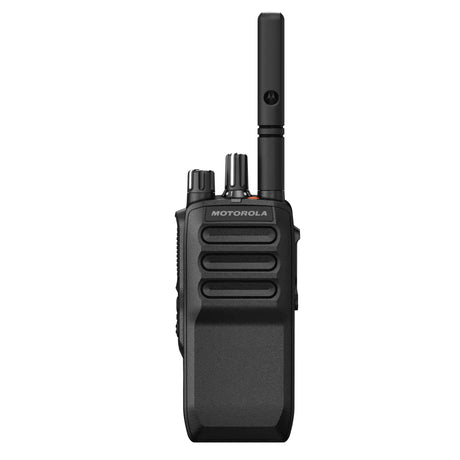


Which Radio Fits Your Campus
Six radios, six different jobs. Pick by who is carrying it, not by price.
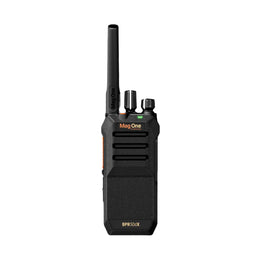
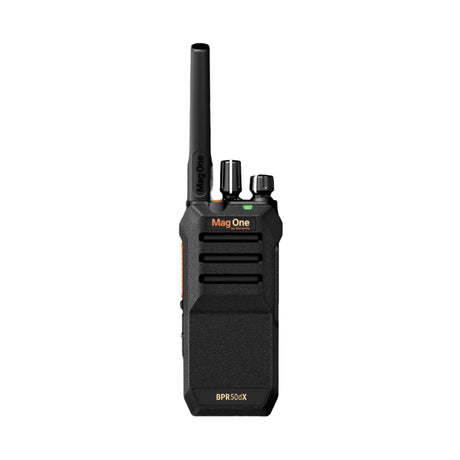
Motorola BPR50dX
Light, tough, and easy enough that any staff member can pick it up and use it. The current Mag One model, so it fits alongside the Mag One radios many schools already run.
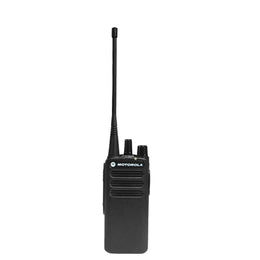
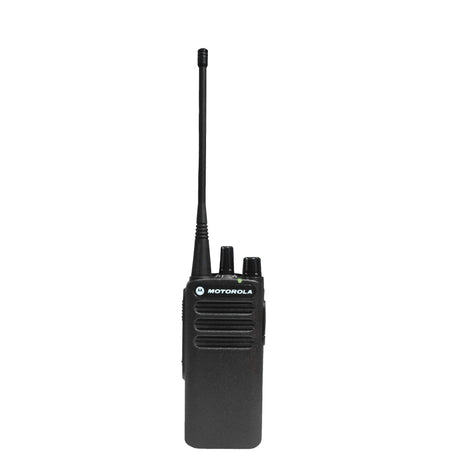
Motorola CP100d Non-Display Radio
Enough channels to give teachers, security, maintenance, and the front office each their own, with no cross talk between them.
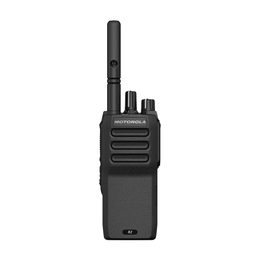
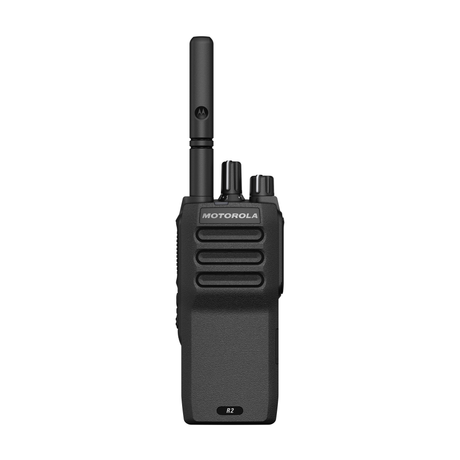
Motorola R2 Digital Two-Way Radio
Sealed and drop tested for the people who work athletic fields, bus loops, and parking lots in any weather.
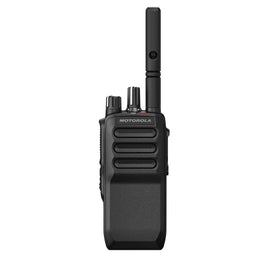
Motorola R5 Digital Two-Way Radio
Built for the teams that live on the radio all day. Pair it with a repeater and it will carry across a sprawling campus, from the far field back to the front office.

Motorola TLK110 Radio
Nationwide push to talk over cellular. Covers every building and every bus route across the district with no repeaters to install.

Motorola TLK150 Mobile Radio
A mobile unit for the fleet. Runs on the same nationwide network as the TLK110, so drivers, dispatch, and campus staff all share one system.

Bigger Campus? You Need a System, Not Just Radios.
Once you are covering multiple buildings, athletic fields, and bus loops, radios alone stop being enough. A repeater carries your signal across the whole campus. TWRG designs, licenses, installs, and supports the whole system, from a single school to a district.
- FCC licensing handled for you
- SLR5700 and SLR8000 repeaters
- Design, programming, installation
Everything You Need to Decide, In One Place
Sizing, licensing, a channel plan you can copy, and the four places every campus finds a dead zone.
What Your Campus Actually Needs
Most schools either under buy and leave staff uncovered, or over buy and leave radios in a drawer. This is the sizing we land on for most campuses.
| Campus | Typical fleet | Where schools land |
|---|---|---|
| Daycare or preschool | 4 to 8 radios | BPR50dx |
| Elementary, one building | 8 to 15 radios | CP100d |
| Middle, multi building | 15 to 30 radios | CP100d, R2 for security |
| High school plus athletics | 30 to 60 radios | R2 and R5, TLK150 in buses |
| District, multi campus | 60 or more | TLK110 across sites |
NoteCount roles, not people. A radio per role that is always covered beats a radio per staff member that goes flat by lunch.
Do You Need an FCC License?
This is where school purchases stall. The honest answer is that it depends on which radio you buy.
- UHF and VHF radios need one. The CP100d, BPR50dx, R2, and R5 transmit on business frequencies the FCC licenses to you under Part 90. The license runs ten years and covers your school on your assigned frequencies.
- WAVE radios do not. The TLK110 and TLK150 run over the cellular network, so there is no frequency to license and nothing to file.
- You do not file it yourself. TWRG handles the application as part of the order. This is the single most common reason a school thinks radios are harder than they are.
NoteOperating an unlicensed business radio is a real violation, not a technicality. If someone sold you radios and never mentioned a license, that is worth a phone call.
A Channel Plan That Works
Every school we set up ends up close to this. Start here and adjust rather than inventing one from scratch.
| Ch | Who | Used for |
|---|---|---|
| 1 | All call | Emergencies and drills only. Keep it quiet otherwise. |
| 2 | Front office and admin | Day to day, visitors, call outs |
| 3 | Security and resource officer | Incidents, patrols, arrival and dismissal |
| 4 | Maintenance and custodial | Work orders, spills, facilities |
| 5 | Transportation | Bus loop, routes, late buses |
| 6 | Athletics and after school | Games, practice, events |
NoteAdd privacy codes (CTCSS or DCS) to every channel. Without them you will hear the landscaping crew across the street, and they will hear you.
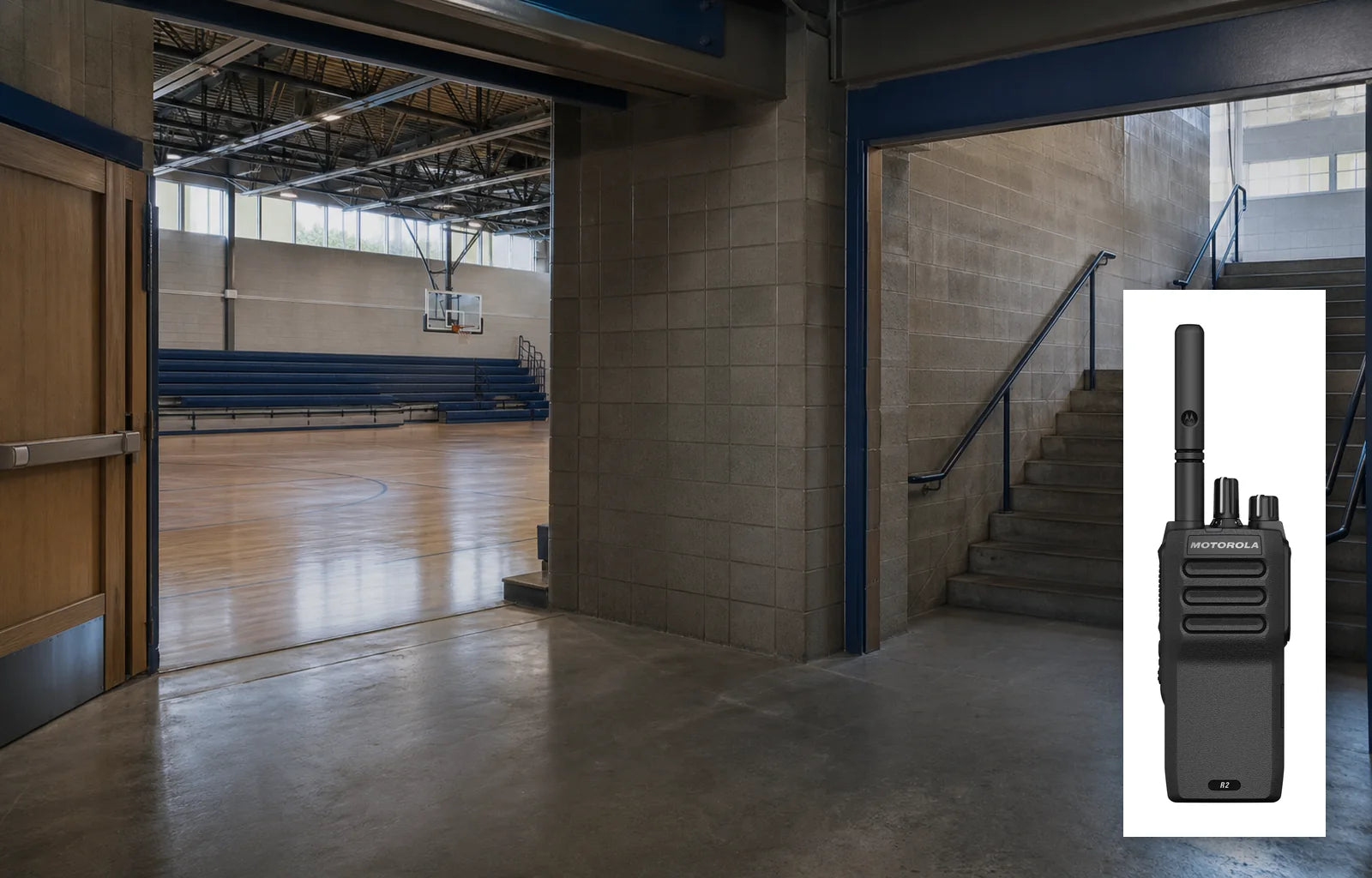
Where School Radios Lose Signal
Handhelds cover a normal building fine. These four spots are where every school finds a dead zone, usually during an actual incident.
- Gyms and auditoriums. Steel and concrete kill signal exactly where your biggest crowds are.
- Stairwells, basements, and boiler rooms. Where maintenance spends its day.
- Portables at the back of the lot. Far from the office and usually the last thing anyone tests.
- The far athletic fields. Fine on a quiet afternoon, not fine on a Friday night.
NoteIf two or more of these sound familiar, the fix is a repeater, not more radios. That is a system.
See how radio systems work →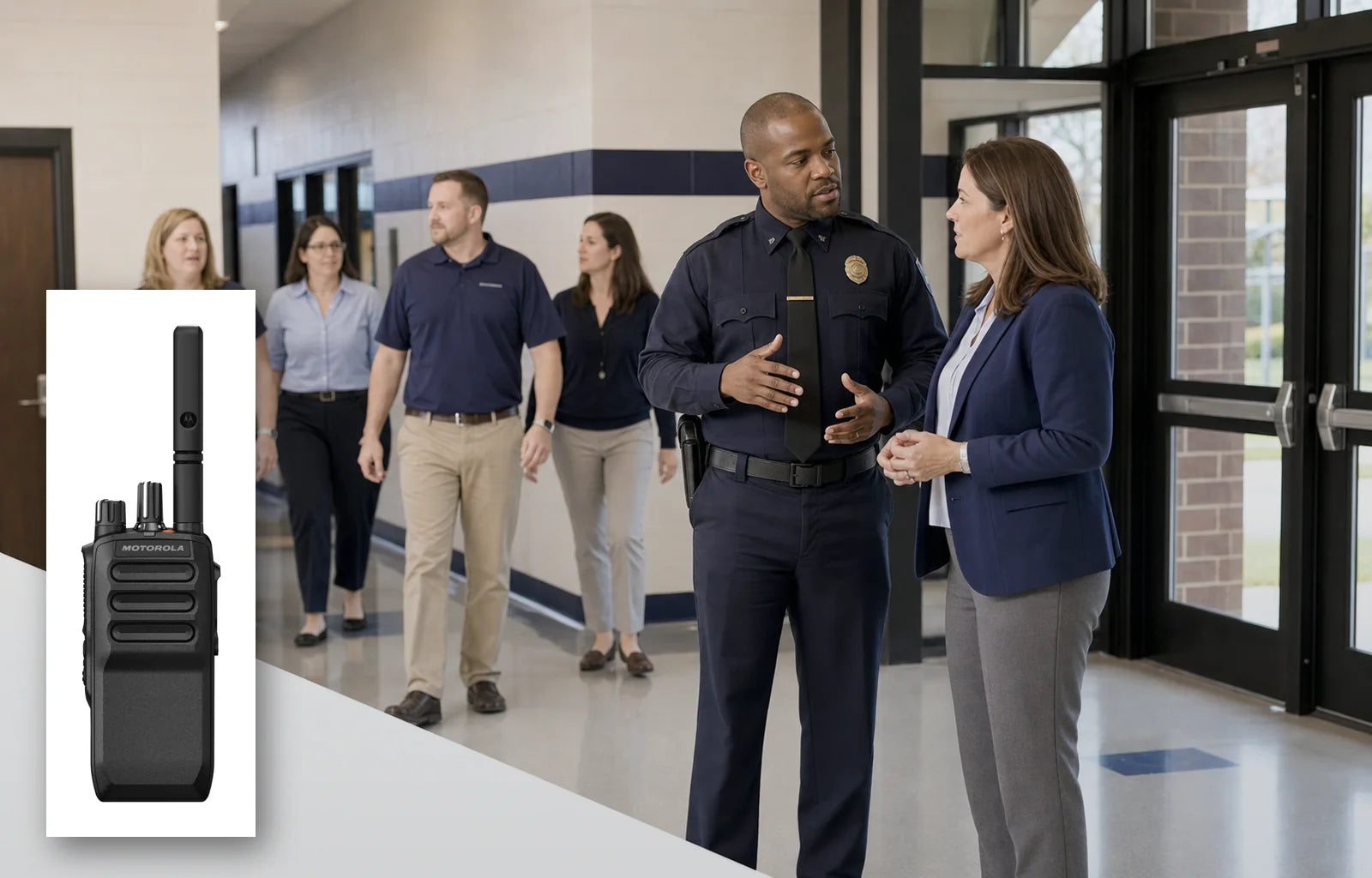
What Radios Do, and Do Not Do, in an Emergency
Be careful here, because vendors oversell it.
- Alyssa's Law is not a radio law. Where it has passed, it requires a silent panic alarm that links directly to law enforcement. A two-way radio is not that system and does not satisfy it.
- Radios are how the minutes get managed. The alarm summons help. Your staff still has to hold doors, move students, direct arriving officers, and account for classrooms. That happens on the radio.
- The emergency button matters. Every radio here has one. Program it to the all call channel so a staff member can raise the whole campus without finding a channel first.
- Drill on the radios. A fire drill where nobody keys a radio is not a test of your communications.
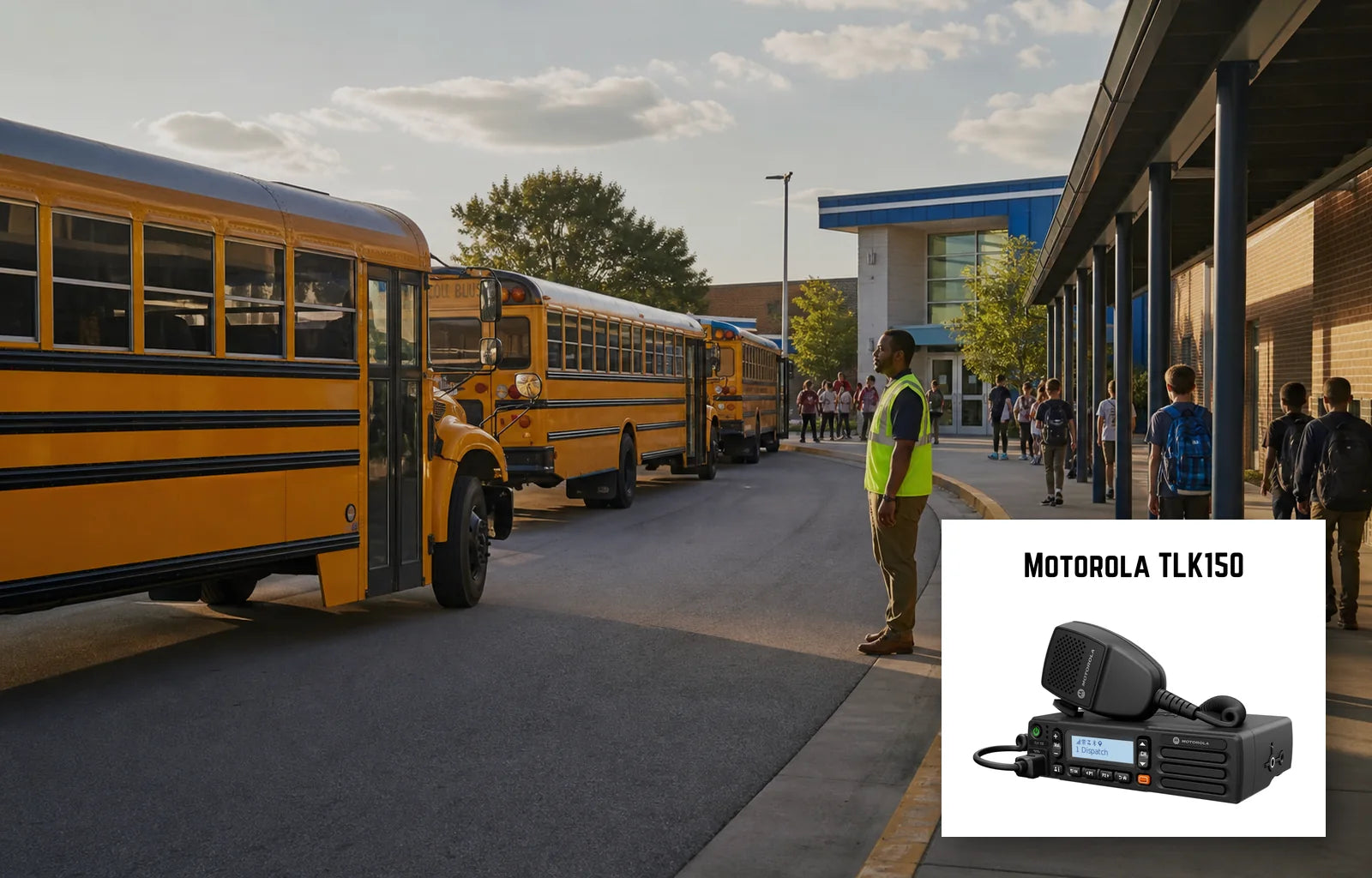
Buses, Field Trips, and the Bus Loop
The bus loop is where the most people move at once and where handhelds run out of room.
- The TLK150 mounts in the bus. It runs on the nationwide network, so a driver on a route is on the same system as the front office.
- Range stops being a question. There is no repeater to reach and no distance limit. A field trip two hours away is still on channel.
- Dismissal gets faster. Bus loop staff, the office, and drivers on one channel is the single biggest time saver most schools report.
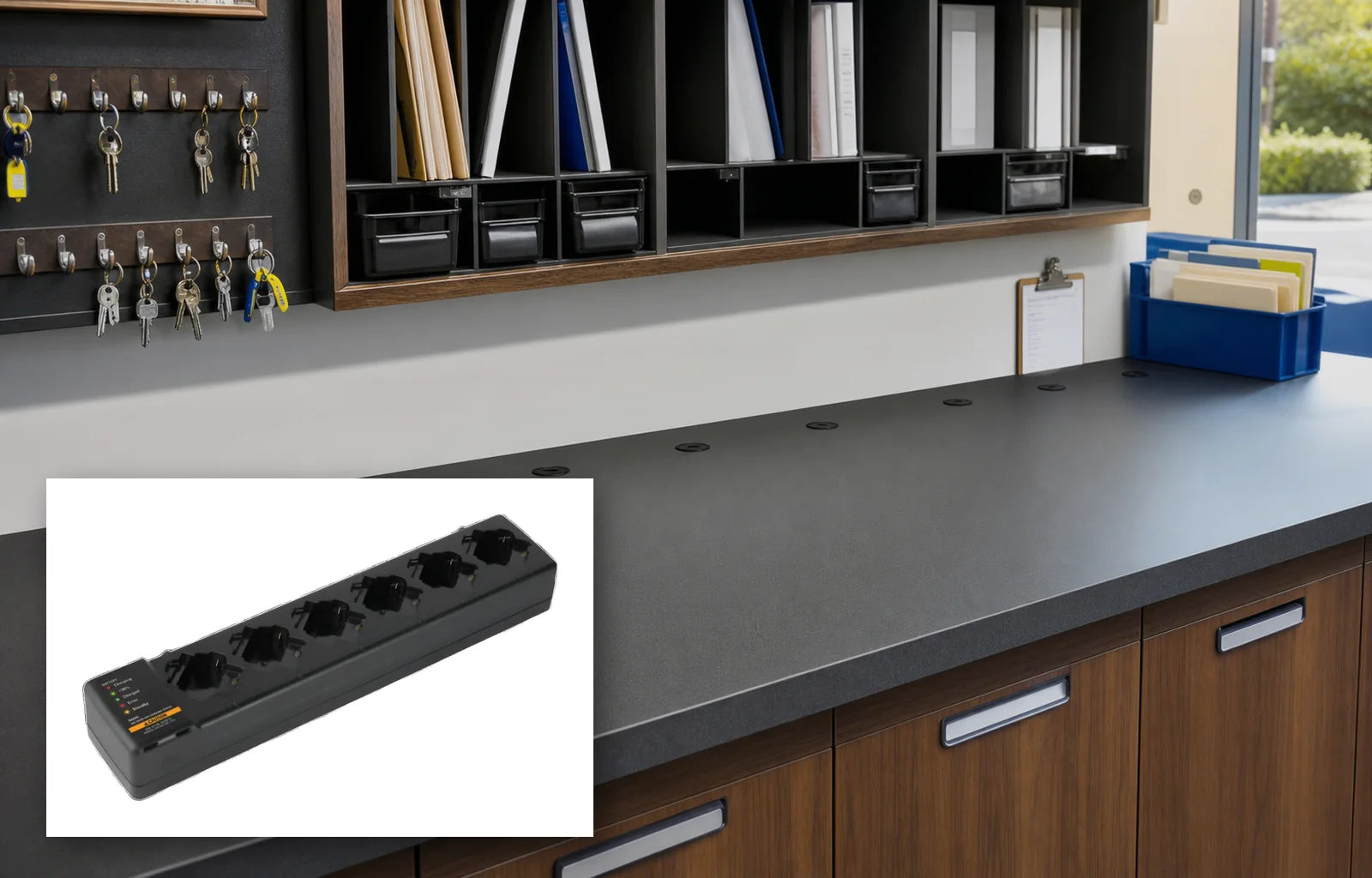
Running the Fleet Without Losing Radios
The radios are the easy part. Keeping forty of them charged, present, and working is the part schools ask us about in year two.
- Charge in banks, overnight. A multi unit charger in the office beats individual chargers scattered across classrooms.
- Assign by role, not by person. Radio 4 belongs to whoever is on the bus loop, not to a named teacher who might be out.
- Keep spare batteries for the long days. Games, concerts, and parent nights outlast a shift battery.
- Check them at the start of the day, not during the drill. Thirty seconds at the front office catches the flat one.
Frequently Asked Questions
What are the best two-way radios for schools?
The Motorola CP100d for teachers and administrators, and the Motorola R2 for security and maintenance staff who work outdoors. Those two cover the majority of campuses.
What is the most affordable radio for a school?
The Motorola BPR50dx is the simplest and easiest to hand to any staff member. Step up to the CP100d when you need more channels to keep departments separated.
Do we need an FCC license?
For UHF and VHF radios like the CP100d, BPR50dx, R2, and R5, yes. It is a Part 90 license, it runs ten years, and TWRG files it with your order. WAVE radios like the TLK110 and TLK150 run on cellular and need no license at all.
Do two-way radios work across a whole district?
The TLK110 does. It uses nationwide push to talk over cellular, so every campus and every bus route is on one system with no repeaters to install. The TLK150 covers the buses themselves.
What if our campus is too big for handhelds alone?
Gyms, stairwells, portables, and far athletic fields are the usual dead zones. The fix is a repeater, which makes it a radio system rather than a box of radios. TWRG designs, licenses, and installs those.
Not Sure What Your Campus Needs?
Tell us your buildings, your team size, and your budget. We will build the list.