Build a construction radio plan around the site
A radio that works well in an open staging area may not cover a concrete stairwell or the far side of a steel structure. Describe the work zones before selecting equipment; check coverage at the locations crews need to reach.
- Indoor versus outdoor work: include basements, elevators, upper floors, tunnels, trailers and changing site boundaries.
- Noise and protective equipment: identify machinery, wind and hearing protection so audio accessories can be matched to the work.
- Dust and water: compare the model-specific rating. Motorola lists R2 at IP55 and R7 at IP66/IP68; accessory and battery choices still matter.
- Crew structure: count simultaneous users and workgroups that need separate channels. More channels do not increase radio coverage.
- Existing radios: provide model numbers, bands, operating modes and licensed frequencies. Mixed equipment needs a compatibility review.
- Shift and charging plan: count individual charging points, shared chargers, spare batteries and places where radios will be stored.
Match a model to the requirement
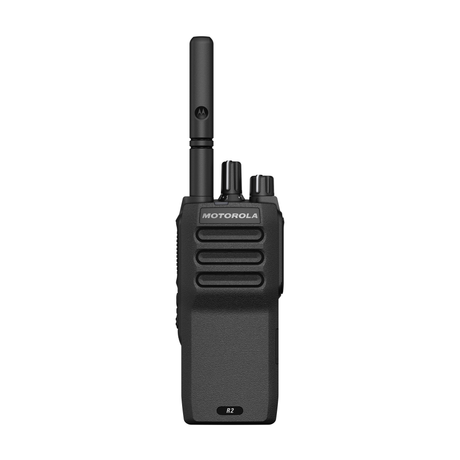
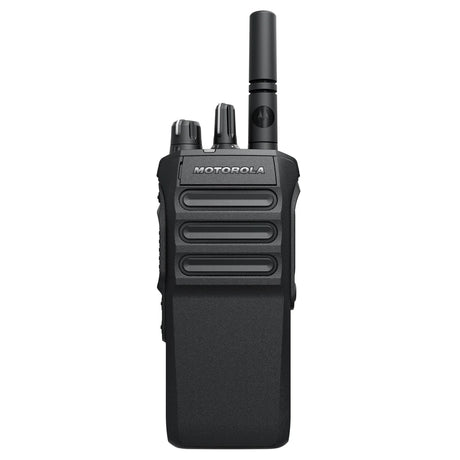
R2: a starting point for straightforward on-site crew communication. Confirm the selected analog/digital option and frequency band. Its IP55 rating should not be treated as an immersion rating.
Review R2 configurations and team packs
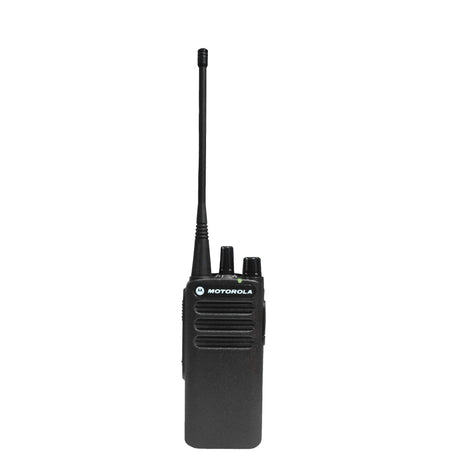
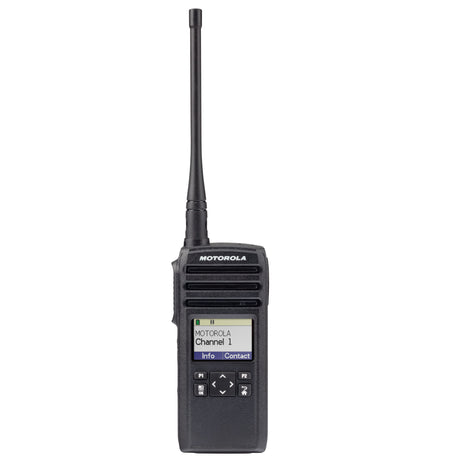
CP100d: compare when you need to choose between simple non-display operation and separate display/keypad models. Verify the exact model and operating mode instead of treating every CP100d configuration as identical.
Review the CP100d non-display model
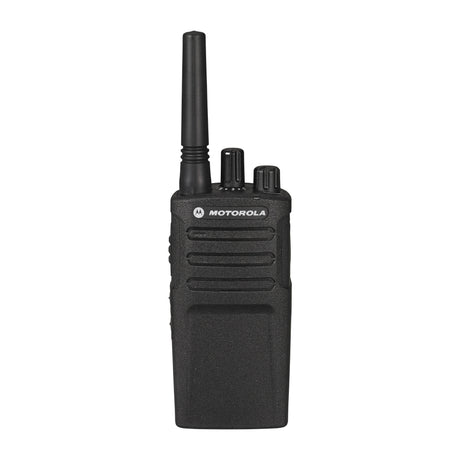
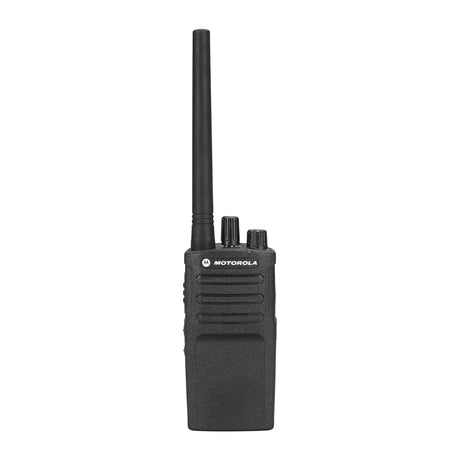
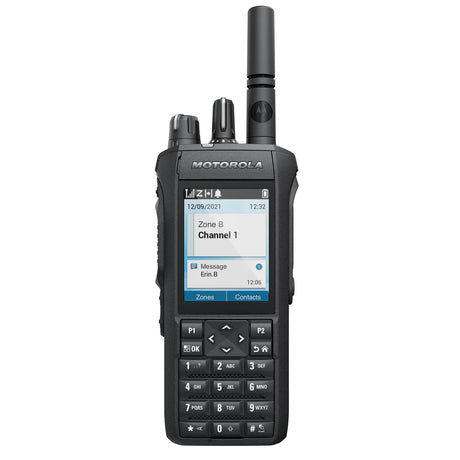
R7: compare for more demanding audio and environmental requirements. Choose the band, keypad and feature level for your system. Ruggedness does not establish hazardous-location approval; those sites require the correct certified radio, battery and accessories.
Compare R7 no-keypad and full-keypad models
TLK110: compare for coordination between separate sites where supported LTE or Wi-Fi coverage is available. An active service plan is required. It does not automatically communicate with conventional radios; any connection needs a supported integration.
Review TLK110 equipment and service requirements
What to include in your job-site quote request
- Site location, building type, number of floors and work-zone map.
- Number of simultaneous users, trades, supervisors and spare radios.
- Current radio model numbers, bands and channel information.
- Known dead spots, noisy areas, weather exposure and required certifications.
- Shift length, battery plan, individual/shared charging and audio accessories.
- Required start date; for separated sites, available network coverage.
Programming is available at no charge. Every radio includes a battery and individual charger; additional multi-unit chargers and audio accessories are included when specified in the selected package. Confirm stock and programming turnaround with the team for your start date.
Send your requirements for a construction radio quote
Construction radio questions
Does higher wattage guarantee site coverage? No. Building materials, terrain, antenna position and system design matter. A repeater may help a suitable conventional-radio system, but it needs a compatibility and coverage assessment.
Do these radios need a license? Conventional licensed business radios require the applicable FCC authorization for U.S. operation. Programming is separate from licensing. Network-based radios instead have service and coverage requirements; check the selected product.
Can one radio suit every trade? Different roles may need different audio accessories, carrying options and protection. Build a compatible fleet around those roles rather than assuming one package fits every worker.
Read the construction radio buying guide
Explore commercial radio buying options
Manufacturer references
Motorola R2 North America data sheet
Motorola R7 specifications and options


 From $149.00