

Map classified areas
List the class and division of each work area so every radio, battery, and accessory carried there is approved for it.
Over 25 YEARS in the Two-Way Radio Industry!

Intrinsically safe use requires the approved configuration. Choose Intrinsically Safe: Yes on the product page and confirm the classification of each work area.
View All Oil & Gas RadiosExplore another option: All Intrinsically Safe Radios
Start with crews in classified areas, field operators, drivers, and control-room staff. Compare the roles below, then confirm certification, coverage, and compatibility for your sites.
| Radio or use case | Best for | Coverage | Licensing and planning |
|---|---|---|---|
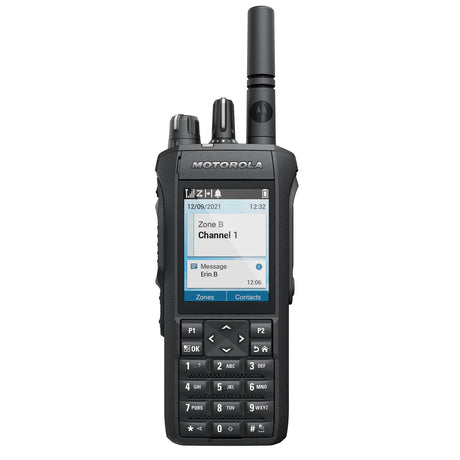
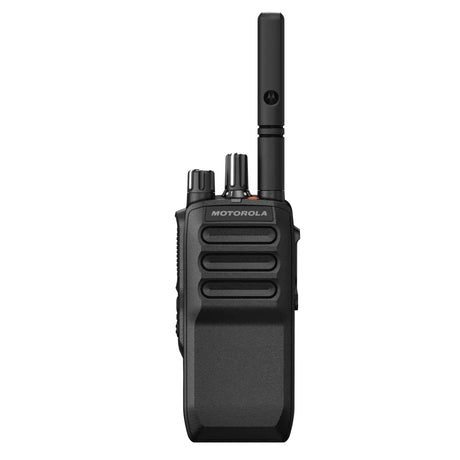
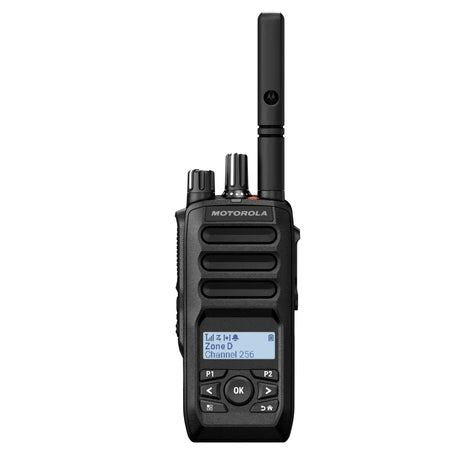
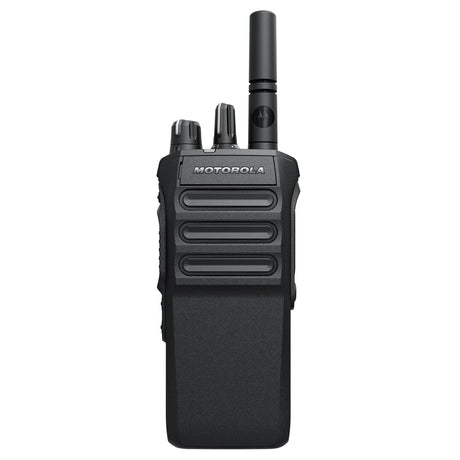
| R7 Digital Two-Way Radio | Hazardous Areas | Local radio; system-dependent coverage | Order the intrinsically safe configuration |
| R5 Digital Two-Way Radio | Hazardous Areas | Local radio; system-dependent coverage | Order the intrinsically safe configuration |
| R7 Digital Two-Way Radio with Display | Field Crews | Local radio; system-dependent coverage | Confirm U.S. business licensing |
| TLK110 Radio | Field Crews | Supported LTE / Wi-Fi network | Service plan required |
| MOTOTRBO CM300d Mobile Two Way Radio | Control Room & Fleet | Local radio; system-dependent coverage | Confirm U.S. business licensing |
| TLK150 Mobile Radio | Control Room & Fleet | Supported LTE / Wi-Fi network | Service plan required |
Fleet planning noteIntrinsic safety depends on the complete configuration: radio, battery, and accessories. Confirm the approval each site requires before deployment.

Well sites, compressor stations, pipelines, and the trucks that connect them each need a different setup. Start with the classified areas on your sites, then plan coverage for field crews and the link back to the control room.
Build your plan around crews in hazardous areas, field operators, drivers, and the control room, with the right equipment and support for the way they work.
List the class and division of each work area so every radio, battery, and accessory carried there is approved for it.
Review well sites, compressor stations, and pipeline routes where local coverage is weak, and decide where a repeater or LTE radio fits.
Plan mobile radios for trucks and a dispatch position that reaches crews across the territory.
The MOTOTRBO R5 and R7 are offered in an intrinsically safe configuration. Choose Intrinsically Safe: Yes on the product page. Approval covers the complete configuration, including the battery and accessories, so confirm the classification of each work area before you order.
Map the well sites, compressor stations, and routes where crews work. Local radios with a repeater cover a defined site; nationwide LTE push-to-talk radios reach crews wherever supported carrier coverage exists. Many operations use both.
No. Ruggedness or water resistance does not establish hazardous-location approval. Confirm the exact radio, battery, accessories, and certification required by the work site before selecting equipment.
Compatibility depends on the frequency band, operating mode, programming, and radio system. Local business radios and network-based WAVE PTX devices do not automatically communicate with one another. Share your current model numbers so we can review the connection before you purchase.
Include the number of users, their roles, your sites and the hazardous-area classification of each, shift lengths, existing radio models, and any coverage problems.
Tell us about your sites, hazardous-area classifications, team roles, existing radios, and coverage concerns. We will help you build a practical radio plan.
Your monthly cost