

The burnout your team felt in Q4 wasn't caused by workload - it was caused by "Input Overload." Old tools like PA systems and analog radios fracture focus and destroy manager value. The 2026 strategy is "Operational Silence": replacing noise with signals using the Motorola TLK 25, Motorola Curve, and Halo Smart Sensors to automate the chaos.
The Post-Q4 Autopsy: Why Your Store Needs "Operational Silence"

The post-holiday autopsy of Q4 2025 reveals a structural failure. It wasn't just that the traffic was high; it was that the "Input Overload" reached a level where human systems simply broke. For the operations director or the loss prevention officer, the holidays acted as a stress test that exposed every operational crack in the building.3 If foot traffic spikes and your primary way to manage it is a microphone and a scream, you aren't running an operation, you're managing a collapse.
In early 2026, the industry is no longer satisfied with "surviving" the rush. The focus has shifted toward "Invisible Operations." This is the transition from a store that functions through noise to a store that functions through signal. It is the realization that the manager's value is being destroyed by the very tools meant to help them. This report deconstructs the burnout crisis and provides the blueprint for a silent, high-output 2026.
How to reduce retail staff burnout in Q1
Reducing staff burnout in the first quarter of 2026 requires more than a "wellness memo" or a pizza party. It requires an aggressive removal of the sensory stressors that characterized the previous quarter. Burnout in retail is rarely about the work itself, it is about the friction of the work. It is the constant interruption. The data suggests that 69% of retail workers were already exhausted before the 2025 holiday season even began. By the time January arrived, 57% of staff reported a total inability to re-engage with their roles, with nearly 40% actively considering a career change due to the "returning-to-work dread".
The primary catalyst for this Q1 re-engagement struggle is the "Intensity Switch." Managers expect an instant return to momentum, yet the tools on the floor are still the ones that caused the fatigue in the first place. To reduce burnout, leadership must implement "Operational Silence."
The End of the PA System
The most significant reduction in cognitive load comes from the removal of the overhead PA system. Every time a manager's voice booms over the speakers to call for a price check, the focus of every employee and customer in the building is fractured. It is an "Input Overload" that creates a baseline of anxiety. The solution is moving communication to a "private ear" model. By equipping teams with the Motorola TLK 25, communication is directed only to those who need to hear it.
The Hierarchy of Silence: Choosing Your Tool
Not every store needs the same level of technology. In our Q1 2026 analysis, we have categorized the operational needs into four distinct "Identities." Your choice of hardware should match the psychological reality of your floor.
1. The Innovator (Total Visibility)

2. The Modernizer (Professional Privacy)
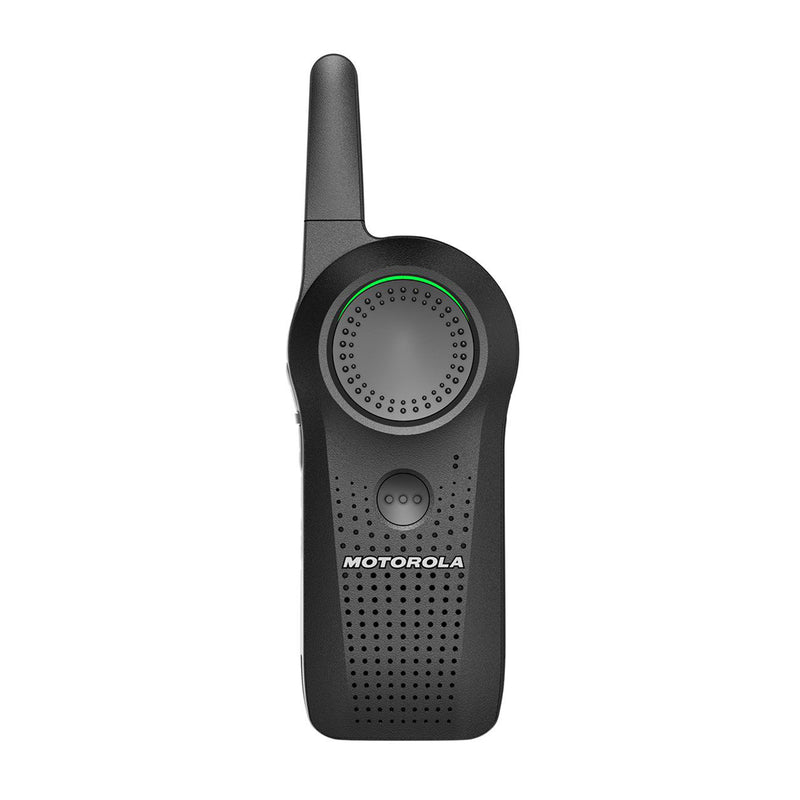
3. The Heavy Lifter (Raw Power)
The Tool: Motorola BPR50dx
The Use Case: "Dead Zones are Theft Zones." If your store has thick concrete walls, a basement, or a sprawling warehouse, Wi-Fi might not cut it. The BPR50dx is the "Concrete Breaker," designed to punch through interference and keep the loading dock connected to the front register.
4. The Pragmatist (Simplicity)
The Tool: Motorola CLS1110
The Use Case: The "Zero-Friction Standard." If you rely on seasonal staff and high turnover is a reality, you need a radio with a button that just works. No menus, no software, just instant connection.
The Guard & The Shield: Automating Oversight
In the "Invisible Store," the manager cannot be everywhere. That is why hardware must act as the physical extension of your software.
The Bathroom Monitor: Halo Smart Sensor 3C

The Gatekeeper: BoxLock
For the "Last Inch" of your supply chain, BoxLock provides the audit trail for unattended deliveries. It ensures that when your inventory arrives at the back dock at 4 AM, it is secured without waking up a manager to sign for it.
Product Positioning: The Invisible Store
We are no longer selling a "Two-Way Radio." We are selling "Operational Silence."
The "Invisible Store" is a concept where the logistics of retail happen behind the scenes, leaving the customer with an undisturbed, premium experience. In the chaos of Q4, the customer saw the seams. They saw the stressed manager shouting into a microphone. They saw the staff huddled at a charging station. They felt the noise.
The hero of the Invisible Store is the Motorola TLK 25. Positioned as "The Anti-Chaos Button," it removes the need for public address systems. It is the tool that allows a manager to move from being a babysitter to being a strategist.

The Economics of Burnout: The "Effective Hourly Wage"
The most compelling argument for upgrading your "Signal" is financial. Most retail managers are salaried. During Q4, a $55,521 annual salary is frequently exploited by a 60-to-70-hour work week.43 This is the "Salaried Overtime Trap."
When you calculate the Effective Hourly Wage, the impact of operational chaos becomes clear:
- Standard 40-hour week: $26.69 / hour.
- 60-hour Q4 peak (Input Overload): $17.79 / hour.
- 70-hour "Babysitter" mode: $15.25 / hour.
By the time the manager's wage drops to $15.25, they are often making less than the entry-level staff they are managing. This "absolute surplus value" extraction is the primary driver of the 40% turnover consideration in Q1.
Restore Your Value
Investing in the Silence Kit - the 6-pack bundle of Motorola TLK 25s - is an investment in restoring the manager's value. Return 10-15 hours a week to your leadership team.
Equip Your Team with The Silence KitFrequently Asked Questions About Motorola TLK 25
Does the TLK 25 require an FCC license?
No. The TLK 25 operates on Wi-Fi (802.11 a/b/g/n/ac), meaning it requires zero licensing fees and zero infrastructure setup beyond your existing wireless network.
How long does the battery last on a retail shift?
The TLK 25 features a 96-hour standby time and easily covers a full 12-hour retail shift on a single charge, eliminating the "mid-shift swap" common with older analog units.
Can it connect to our existing MotoTRBO radios?
Yes. Through the WAVE PTX ecosystem, the TLK 25 can communicate with your existing two-way radio fleet, bridging the gap between your warehouse team (on radios) and your sales floor (on wearables).